

Ballot Count – for special ballot (mail-in) voting
Electors may choose to vote in any provincial electoral event by mail. This is an excellent option for voters who will be away from their ordinary residence in Alberta during advance voting or on Election Day for work, school, military service, vacation, travel, or any other reason, or who do not want or are not able to vote in person.
Electors’ completed special ballots must be returned by mail. The outer envelope (Envelope B) must include:
- A signed special ballot declaration,
- A copy of the elector’s authorized identification, and
- Envelope A with the ballots sealed inside.
These are received by election officers.
The first step in the special ballot receiving process is to collect and open special ballot packages. This process ensures the secrecy of the vote, while verifying the elector’s identification and information. Scrutineers may observe this process.
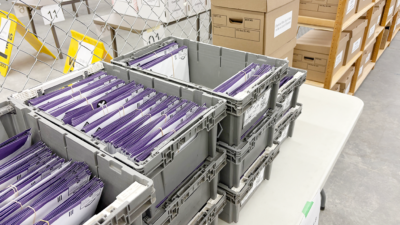
1. Using the unique elector identifier on every Envelope B, an election officer locates the elector’s special ballot application in Elections Alberta’s election management system.
2. Envelope B is opened and the declaration, copy of accepted ID, and sealed ballot envelopes are removed.
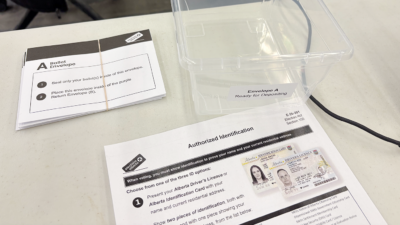
3. The information on the declaration is verified. This means it matches the voter’s information in the voter registration system, it is signed by the elector, and it is dated.
4. The copy of the elector’s accepted identification is reviewed to confirm it is accepted ID, it matches the information on the declaration and the voter registration system, and the signature matches the signature on the declaration.
5. If these requirements are met, the special ballot is accepted, and the voter list is updated to show the elector has voted.
6. If these requirements are not met*, the special ballot is rejected and the voter list is not updated. Electors whose special ballots have been rejected are notified and may vote in person at advance voting or on Election Day.
7. For accepted special ballots, the elector’s electoral division number is written on Envelope A (the smaller sealed envelope containing the ballots) and the envelope is placed in a separate container for collection by ballot box clerks. (There is no information on this envelope identifying the elector).
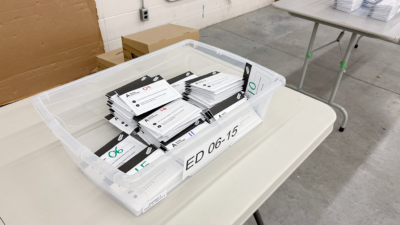
8. The special ballot declaration and copy of identification are filed in the official documents box for that electoral division.
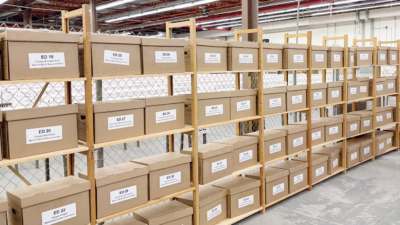
9. Rejected special ballots declaration, copy of ID, and sealed ballot envelopes (Envelope A) are returned to Envelope B and filed separately from accepted ballot documentation.
*Sometimes, an elector has not included the declaration or copy of accepted ID. These electors are contacted and provided the opportunity to correct the issue. If they provide the required documents by the receiving deadline, their ballot will be accepted. If they do not, their ballot will be rejected.
The second step is to deposit the ballots in the correct ballot boxes. This is done by ballot box clerks. Scrutineers may observe this process.
1. The clerk collects Envelope A and locates the correct ballot boxes for the electoral division using the number written on the front of the envelope in the previous step.
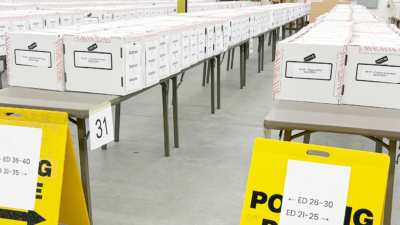
2. Once there, the clerk carefully opens Envelope A and removes the ballots, taking care to keep the ballots folded. Envelope A is checked to ensure it is empty, and discarded in the assigned spot.
3. Using the numbers on the back of each ballot, each ballot is deposited in the correct ballot box.
All ballot boxes containing special ballot will be sealed prior to being securely transferred to the special ballot counting facility. Scrutineers may observe the process and sign off at both ends of the secure ballot box transportation.
The special ballot count will proceed in the same manner as the count for all in-person ballots.